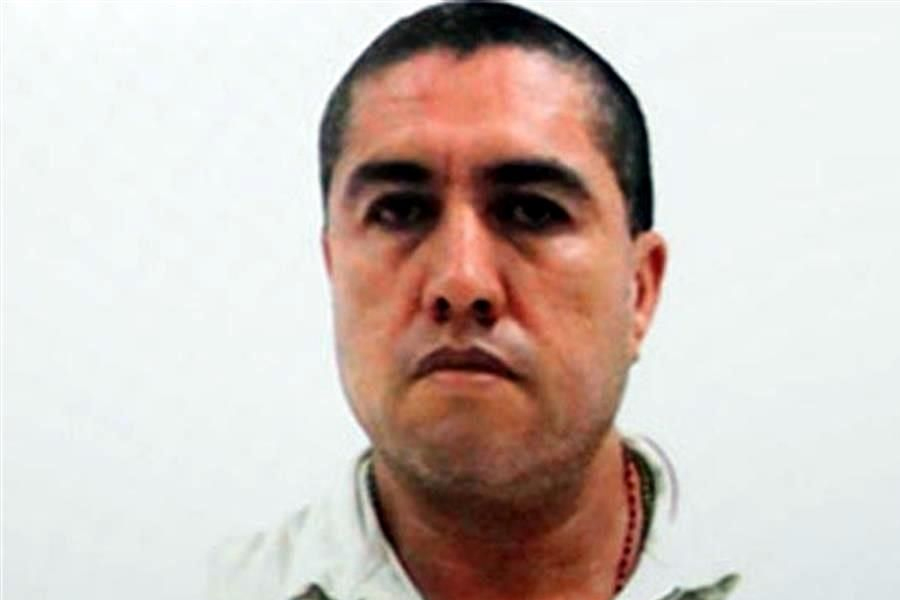
A name tied to a larger family story
When I look at Alberto Carrillo Fuentes, I do not see an isolated figure. I see one branch of a family tree that grew in hard soil and spread into one of the most notorious criminal dynasties in Mexico. His name appears alongside men who shaped the Juárez Cartel, men who were chased by law enforcement, men who became symbols of a violent era. Alberto Carrillo Fuentes is best understood not as a lone character, but as part of a system built on kinship, loyalty, fear, and inheritance.
He is widely associated with the Juárez Cartel and the successor structure often called the Nuevo Cártel de Juárez. Public accounts describe him as a brother of Amado Carrillo Fuentes and Vicente Carrillo Fuentes, two of the best known figures in that family. In that circle, blood was not just a private bond. It was infrastructure. It was the wiring under the floorboards, hidden but essential.
The family name that carried weight
The Carrillo Fuentes family comes up again and again in stories about organized crime in northern Mexico. Their mother is identified as Aurora Fuentes López, and their father as Vicente Carrillo. Those two names sit at the root of a large family that includes several sons and daughters, many of whom were drawn into public attention because of the cartel empire around them.
Amado Carrillo Fuentes is the most famous of the brothers. He became known as El Señor de los Cielos, a title that still echoes like thunder in the history of Mexican organized crime. Vicente Carrillo Fuentes followed in the family orbit and became known as El Viceroy. Alberto Carrillo Fuentes belonged to that same household, the same lineage, the same pressure cooker of status and danger. Other siblings named in public reporting include Rodolfo, José Cruz, Guadalupe, Angélica, Cipriano, Jorge, María Luisa, Aurora, Alicia, Flor, and Berthila or Luz Berthila, depending on the account.
In families like this, the surname is both shield and sentence. It opens doors inside a criminal structure, but it also paints a target on the back. The Carrillo Fuentes name seems to have done both.
Alberto Carrillo Fuentes in the cartel era
Alberto Carrillo Fuentes became publicly known because of his connection to the Juárez Cartel structure after the death of Amado Carrillo Fuentes in 1997. The organization changed shape over time, but the family remained central. Alberto was later described as part of the leadership circle of the New Juárez Cartel, a sign that he was not merely a distant relative on the sidelines. He was inside the machine.
Reports from 2013 said authorities were watching financial transactions that helped them locate him. That detail matters. It suggests a world where money movement, communication devices, and logistics were just as important as weapons. Cartels do not run only on force. They run on numbers, routes, payments, and silence. Alberto’s arrest in Bucerías, Nayarit, in late August 2013 placed him directly in the spotlight. Police reportedly found firearms, ammunition, communication gear, and packages believed to contain cocaine.
His public trajectory is not one of speeches, campaigns, or business expansions. It is a much darker arc. He moved through the shadows of a violent enterprise and was later sentenced in 2018 to 13 years and 8 months in prison. That sentence marked a formal end to one chapter, but not to the family story surrounding him.
The brothers who defined the legend
Alberto Carrillo Fuentes is a mosaic tile, but Amado and Vicente shine brightest.
Amado Carrillo Fuentes continues to dominate. He was known as El Señor de los Cielos due to the size of his trafficking network. He died in 1997, leaving a huge void. In criminal organizations, vacuums are filled. Quite noisy. Everyone is drawn to it.
Another brother, Vicente Carrillo Fuentes, was the most prominent heir. Often described as taking control after Amado’s death. If Amado was mythical, Vicente was practical, dealing with the repercussions. Alberto lived in a household where legacy was alive and every brother contributed.
Sibling networks can be closed circuits. Brother rises, brother protects, brother is drawn in, and brother is killed or arrested. Not only does the family accompany the cartel. It becomes its skeleton.
Parents, cousins, and the wider web
Aurora Fuentes López and Vicente Carrillo form the parent generation around which the later criminal saga is built. From them came the children whose names would eventually appear in court records, death reports, and cartel histories. The family expanded outward through cousins and nephews as well, including links to the Fonseca side. Ernesto Rafael Fonseca Valencia, Yoanna or Yoana Fonseca, and Esther Fonseca Valencia are part of the broader family map that helps explain how deeply connected these networks can be.
The point is not just that Alberto had relatives. It is that the family itself became an ecosystem. One branch leads to another. Cousins become part of the same public story. Nephews inherit the consequences. Even people who never chose a headline can still be trapped inside one.
That is what makes the Carrillo Fuentes family so significant in the public imagination. It is not only a story of individuals. It is a story of succession. Like a river that keeps splitting into smaller channels, the current keeps moving even after the main stream seems to have changed course.
What stands out about Alberto Carrillo Fuentes
I remember Alberto Carrillo Fuentes most for his continuity. He may not be the most renowned or well-documented sibling, but he shows how a powerful family can stay involved in crime for centuries.
Four clear markers shape his public existence. His role in the Carrillo Fuentes family. He was involved with the Juárez Cartel and its successor. Third, 2013 arrest. Fourth, his 2018 prison term. A story of familial devotion, criminal hierarchy, and the decline of a once-powerful network unfolds inside those dates.
Image is another issue. Men like Alberto are often reduced to nicknames, charges, and arrest images in public records. But underlying that shortened version is a decades-long family saga. The surname matters. Bloodlines carry memories. Histories smoke.
Extended family dynamics and inherited reputation
The Carrillo Fuentes family illustrates something uncomfortable but important. In a criminal dynasty, reputation becomes a kind of currency. A son can inherit access. A brother can inherit trust. A cousin can inherit suspicion. Even after a leader falls, the family name can keep moving through law enforcement reports, newspaper stories, and public memory.
Amado became legend. Vicente became the visible successor. Alberto became part of the same structure, a name attached to leadership, arrest, and conviction. Other relatives appear in the background or in the margins, but the network is still there, stretching outward like cracks in old glass.
That is why any serious look at Alberto Carrillo Fuentes has to include the family members around him. Without them, the picture is too small. With them, the scale becomes clear.
FAQ
Who is Alberto Carrillo Fuentes?
Alberto Carrillo Fuentes is a Mexican organized-crime figure associated with the Juárez Cartel and the Carrillo Fuentes family. He was publicly described as part of the leadership environment around the New Juárez Cartel and was arrested in 2013.
Who are the most important family members connected to him?
The most important names are his parents, Vicente Carrillo and Aurora Fuentes López, and his brothers Amado Carrillo Fuentes and Vicente Carrillo Fuentes. Other siblings and relatives are also part of the wider family network.
Why is the Carrillo Fuentes family so well known?
The family is well known because several members became central figures in the history of the Juárez Cartel. The family name became closely tied to trafficking, leadership struggles, arrests, and violent conflict.
What happened to Alberto Carrillo Fuentes?
He was arrested in Bucerías, Nayarit, in August 2013 and later sentenced in 2018 to 13 years and 8 months in prison.
Why do people still talk about this family?
People still talk about the family because it remains one of the clearest examples of how criminal power can move through generations. The Carrillo Fuentes name still carries historical weight, like an old bell that keeps ringing long after the hand that struck it is gone.