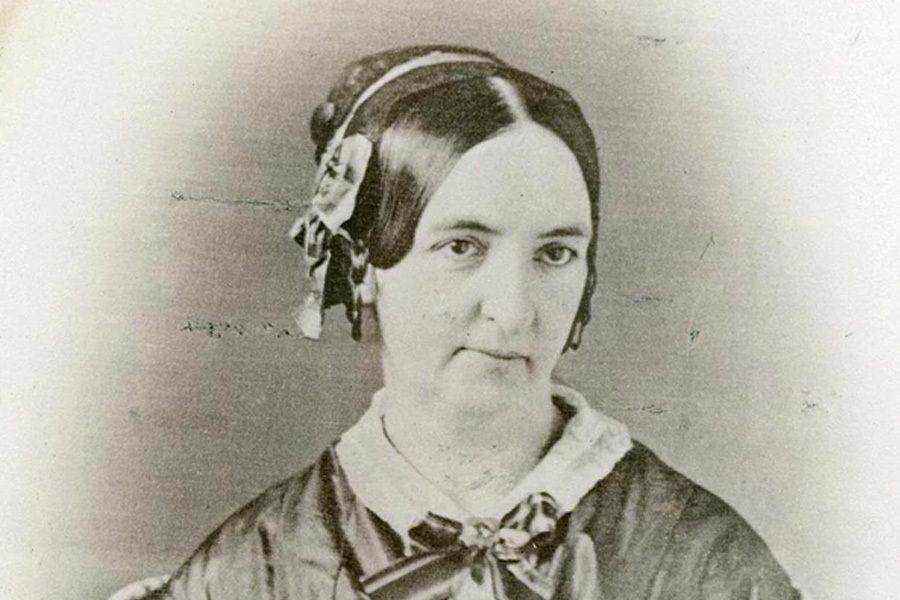
Early life and family roots
I think Martha Coffin Wright unites a restless century into one household. She was born to Coffins on December 25, 1806. Her parents were Anna Folger and Thomas Coffin. This New England Quaker family had a network from Nantucket to Philadelphia. Martha was youngest of a huge family. Her sibling Lucretia Coffin Mott, born in 1793, became a prominent US abolitionist and women’s rights advocate.
Numbers show influence scale. Martha had at least eight siblings. A vibrant, rigorous home education in organization, economics, and moral reasoning was required. Talents carried into public life. I can practically hear Quaker meetings and pen clicks as young women prepared to change public discussion.
Marriages and children
I always picture Martha as both a private matron and a public actor. She married Peter Pelham in 1824 and was widowed in 1826. In 1829, on November 18, she married David Wright, a lawyer and community figure, and moved to the Auburn region of New York. Her household expanded to include at least seven children, a number that created both joy and administrative responsibility.
Here is a quick ledger of the principal family members in her household:
| Relationship | Name | Born | Notes |
|---|---|---|---|
| Father | Thomas Coffin | — | Quaker family leader |
| Mother | Anna Folger | — | Folger family, New England |
| Sister | Lucretia Coffin Mott | 1793 | Leading Quaker minister and reformer |
| First spouse | Peter Pelham | — | Married 1824, died 1826 |
| Second spouse | David Wright | — | Married 1829, lawyer |
| Child | Marianna Pelham | c. 1825 | Daughter of first marriage |
| Child | Eliza Wright Osborne | 1830 | Prominent suffragist, daughter |
| Child | Tallman Wright | c. 1832 | Son |
| Child | Ellen Wright Garrison | c. 1840 | Daughter, active in reform circles |
| Child | William Pelham Wright | c. 1842 | Son |
| Child | Frank Wright | c. 1844 | Son |
| Child | Charles Edward Wright | c. 1848 | Listed in family records |
I note dates with c. when they are approximate. Family life here was not mere biography. It was the engine of reform. Her daughter Eliza, born in 1830, later carried the family mantle into organized suffrage work. Her grandson Thomas Mott Osborne became a notable prison reformer, which shows how influence passed through generations.
Public work, abolition, and women rights
Martha connects private courage with public change. She was an abolitionist and women’s rights organizer when both groups needed moral clarity and social risk. The first women’s rights convention at Seneca Falls in July 1848 was the most significant public event. Martha planned conferences leading to that convention. She signed the Declaration of Sentiments, which demanded equality in 1776 language.
Her village housed slave fugitives. Auburn, New York, was an Underground Railroad hub. Martha and her family knew Harriet Tubman. Tubman’s extended relatives helped her afterward. I admire how moral logistics took place in homes. They hosted guests, hid travelers, raised funds, and wrote cause letters. Small actions add up to national transformation.
Household finances and civic influence
Managing a reform household in the mid 19th century required economic skill. David Wright worked as a lawyer. The Wright and Osborne households later acted as local benefactors. I have seen the pattern before: a family with steady professional income becomes the civic bank for social reform. Money was not always abundant. Yet funds were marshaled, donated, and preserved to support causes, to keep meeting houses open, and to assist individuals like Harriet Tubman.
Numbers again make a quiet point. Martha lived from 1806 to January 4, 1875. That is 68 years and a lifetime straddling the most tumultuous decades in American history. The household she maintained was an incubator for at least one daughter who lived to 1911, and for grandchildren whose civic labors extended into the twentieth century.
The family network and its branches
When you map the family, reforming spokes emerge. Minister and public speaker Lucretia Mott was Martha’s sister. Her daughter, Eliza Wright Osborne, led New York suffrage. The grandson, Thomas Mott Osborne, changed jail treatment. The women advocacy network kept Ellen Wright Garrison active. The Coffin, Mott, Wright, and Osborne names are commitments, not lists.
I choose lattice because it implies strength and permeability. Ideas passed. The aid passed through. Speech went through. That lattice was tied to Auburn by the family name.
Extended timeline table
I like tables because they let dates speak in a compact voice.
| Year | Event |
|---|---|
| 1806 | Martha Coffin Wright born on December 25 |
| 1824 | Married Peter Pelham |
| 1826 | Widowed from Peter Pelham |
| 1829 | Married David Wright on November 18 |
| 1830 | Daughter Eliza born, approximate year |
| 1848 | Seneca Falls Convention, July; Declaration of Sentiments signed |
| 1875 | Martha Coffin Wright died on January 4 |
Personality in practice
If you ask me what mattered most, I will say Martha combined domestic steadiness with public determination. She wrote letters, hosted meetings, raised children, and risked the law to shelter those fleeing bondage. She did not seek headlines. She was the kind of leader who worked in the seams. Her moral imagination was practical. She taught by example. I admire that quiet power.
FAQ
Who was Martha Coffin Wright in a sentence?
I would say she was a Quaker woman born on December 25, 1806, who became an abolitionist, a women rights organizer, a planner and signer of the Declaration of Sentiments in 1848, and the matriarch of a family that continued to shape reform.
What role did she play at Seneca Falls in 1848?
I can tell you she helped plan the meetings that led to the convention in July 1848 and she signed the Declaration of Sentiments. She was one of the practical organizers who turned conversation into an event with a program and a text.
Who were her closest family members?
Her parents were Thomas Coffin and Anna Folger. Her notable sibling was Lucretia Coffin Mott. She married Peter Pelham, then David Wright. Her children included Eliza Wright Osborne and Ellen Wright Garrison, among others, and her descendants carried on public work into the next century.
Was she involved with Harriet Tubman?
Yes. I note that her family and the household in Auburn were connected to Harriet Tubman. Members of the extended family later provided financial and practical support to Tubman in her later years.
Where and when did she live and die?
Martha lived primarily in the Auburn region of New York after her second marriage. She was born on December 25, 1806, and she died on January 4, 1875.