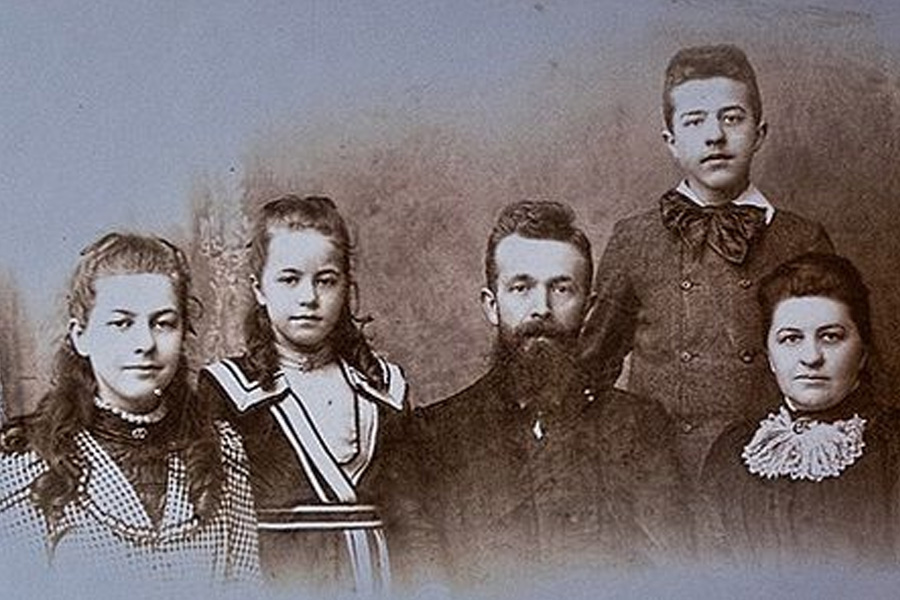
A family tree rooted in conviction
I picture Willem Ten Boom as a man standing in a house where every room carried memory. He was born on 21 November 1886 in Amsterdam, but the story of his life reaches far beyond a birth date. He belonged to the Haarlem Ten Boom family, a household that became famous for watchmaking, prayer, and wartime rescue. In that family, faith was not a decoration on the wall. It was the frame around the whole house.
His father was Casper ten Boom, the watchmaker whose shop in Haarlem became a center of family life and later a sheltering place in a time of danger. His mother was Cornelia Johanna Arnolda Luitingh, often called Cor. She helped hold the family together with discipline, warmth, and a strong Christian conscience. Together they raised a family that would leave a deep mark on Dutch religious history.
Willem was one of several children. His sisters and brothers shaped the same world, each in a different key. Betsie ten Boom, born in 1885, remained unmarried and became known for her spiritual steadiness and her suffering in Ravensbrück. Hendrik Jan ten Boom, born in 1888, died in infancy and is often the quietest figure in the family record, but even that short life belongs to the family story. Arnolda Johanna ten Boom, better known as Nollie, was born in 1890 and later married, building a family of her own. Cornelia Arnolda Johanna ten Boom, better known as Corrie, was born in 1892 and became the most widely known Ten Boom through her writing and testimony.
Willem also stood inside a longer line. His paternal grandparents were Willem ten Boom and Elisabeth Bel. Their legacy mattered because the family shop and the family faith began long before the war era ever arrived. The old watchmaker tradition and the habit of prayer were already part of the family bloodstream.
Willem Ten Boom as minister and scholar
I see Willem as the family member who moved from the watchmaker’s house into the world of theology and public witness. He became a Dutch Reformed minister. That alone would have made him a respected local figure. But he also became a scholar, and his scholarship carried moral weight.
In 1928, Willem completed a dissertation in Leipzig on modern racial antisemitism, especially in Germany. That detail matters because it shows how early he recognized the danger. He was not waiting for the catastrophe to announce itself. He was studying the cracks before the wall fell. In an age when many people preferred silence, he was examining prejudice with a pastor’s conscience and a historian’s eye.
His career did not remain confined to books. He later worked in Hilversum, where he ran a nursing home. It was not merely a place for rest and care. In the late 1930s, as Jews fled Nazi Germany, the home became a refuge. That is one of the clearest measures of Willem’s life. He did not just speak about mercy. He arranged it, room by room, bed by bed, one safe corner at a time.
Marriage, home, and children
Willem married Tine, Christina van Veen, in Haarlem on August 24, 1916. Their marriage gave him a second family based on love and morality. I see their home as a small bridge between daily life and history.
Their six children’s names fit the story.
Katrien Ten Boom was a Willem and Tine offspring. In a family that valued identification, Willem Ten Boom Jr. continued his father’s name. Son Casper Ten Boom continued the family naming tradition honoring prior generations. Hermanna Johanna Ten Boom passed on maternal heritage. Kik, aka Christiaan Johannes Ten Boom, became notable because he figured in resistance accounts. Cornelia Arnolda Johanna Ten Boom continued the family name custom that tied daughters to mothers, grandmothers, and remembrance.
Ten Boom family members lived together. They lived like clock gears. One turn influenced others. One choice rippled across the system.
Brothers and sisters, each with a distinct light
Betsie ten Boom deserves special attention because her life was marked by calm endurance. She remained unmarried, and in many accounts she appears as the family member whose gentleness never dissolved under pressure. Her death in Ravensbrück made her a symbol of faith under suffering.
Nollie, or Arnolda Johanna, followed a different path. She married and formed a family, showing that the Ten Boom legacy was not only about martyrdom and rescue. It was also about continuity, ordinary responsibility, and domestic resilience.
Corrie, the youngest surviving sister, became the most publicly visible. She survived imprisonment, wrote, traveled, and spent the rest of her life telling the world what her family had done. Yet even Corrie’s fame can cast a shadow over Willem if one is not careful. I find it important to restore him to the center, not as an accessory to Corrie’s story, but as a man whose own convictions were already mature before the war made him famous by association.
War, danger, and resistance
Willem’s life changed when Nazism arrived in Holland. He had public compassion for Jews. Action became obvious. He and his family joined a rescue network. His ministry, nursing facility, and family helped danger victims.
Haarlem’s Ten Boom house was invaded on February 28, 1944. The family timeline is rocky around that date. The raid broke the watch shop’s secret bunker and arrested family members. After Casper, Corrie, and Betsie were captured, the family’s wartime involvement became a narrative of courage under observation.
The perilous era net ensnared Willem too. Later biographies picture him as suffering from incarceration and dying in Hilversum on December 13, 1946, after the war. His death makes the story conclude quieter than the rescue parts, but it’s deceiving. A life can end sweetly with thunder.
A timeline that feels like a moral map
| Date | Event |
|---|---|
| 21 November 1886 | Willem Ten Boom was born in Amsterdam |
| 24 August 1916 | He married Christina van Veen in Haarlem |
| 1928 | He completed his dissertation on racial antisemitism |
| Late 1930s | His nursing home in Hilversum sheltered Jews fleeing Nazi Germany |
| 28 February 1944 | The Ten Boom home was raided |
| 13 December 1946 | Willem Ten Boom died in Hilversum |
I read this timeline as a moral map. The dates do not merely tell me when things happened. They show the widening circle of responsibility around one man and one family.
Why Willem Ten Boom still matters
He shows that boldness can be academic. Not only did he hide people. The poison that threatened them was researched. Not only was his family famous. He made that family memorable. Corrie and Betsie were not his only allies. He was a house-supporting beam.
His life proves that one person rarely makes history. Family Ten Boom worked like an orchestra. Casper gave the first faith note. Cor kept time. Betsie showed fortitude. Nollie maintained familial connections. Corrie spoke. Willem gave pastoral awareness, intellectual warning, and practical sanctuary. Kik risked resistance with the next generation. They created a family story that feels more like a lantern in a dark corridor than a museum exhibit.
FAQ
Who was Willem Ten Boom?
Willem Ten Boom was a Dutch Reformed minister, scholar, and member of the famous Ten Boom family of Haarlem. He was born in 1886, married Christina van Veen in 1916, studied antisemitism, and later helped shelter people fleeing Nazi persecution.
Who were Willem Ten Boom’s closest family members?
His parents were Casper ten Boom and Cornelia Johanna Arnolda Luitingh. His siblings included Betsie, Hendrik Jan, Arnolda Johanna Nollie, and Corrie. He married Christina van Veen and had six children: Katrien, Willem Jr., Casper, Hermanna Johanna, Christiaan Johannes Kik, and Cornelia Arnolda Johanna.
What was Willem Ten Boom known for?
He was known for his ministry, his scholarly work on racial antisemitism, and his role in helping Jews find refuge during the late 1930s and wartime period. His nursing home in Hilversum became part of that rescue effort.
How is Willem Ten Boom connected to Corrie Ten Boom?
Willem was Corrie Ten Boom’s older brother. They came from the same Haarlem family and shared the same faith, the same household, and the same wartime moral struggle.
Did Willem Ten Boom have children?
Yes. Public family records list six children: Katrien, Willem Jr., Casper, Hermanna Johanna, Christiaan Johannes Kik, and Cornelia Arnolda Johanna.